> For the complete documentation index, see [llms.txt](https://docs.cheqd.io/product/llms.txt). Markdown versions of documentation pages are available by appending `.md` to page URLs; this page is available as [Markdown](https://docs.cheqd.io/product/getting-started/studio/set-up-account.md).

# Set Up Your Account

Follow these steps to create your account on cheqd Studio and begin using our APIs securely.

The user is required to **Log In** to our **cheqd Studio** portal and then access their API key to authenticate with our APIs. The API key guards the API from unauthorized access and is required for both testnet and mainnet.

## Step 1: Get started with cheqd Studio

Go to **cheqd Studio** and choose **Create account**. New accounts start with a free 30-day trial.

<table data-card-size="large" data-view="cards"><thead><tr><th></th><th></th><th data-hidden data-card-target data-type="content-ref"></th></tr></thead><tbody><tr><td><mark style="color:blue;"><strong>cheqd Studio</strong></mark></td><td>Create your account. You can then create API keys and use the testnet faucet.</td><td><a href="https://studio.cheqd.net/?action=register">https://studio.cheqd.net/?action=register</a></td></tr></tbody></table>

## Step 2: Create your account

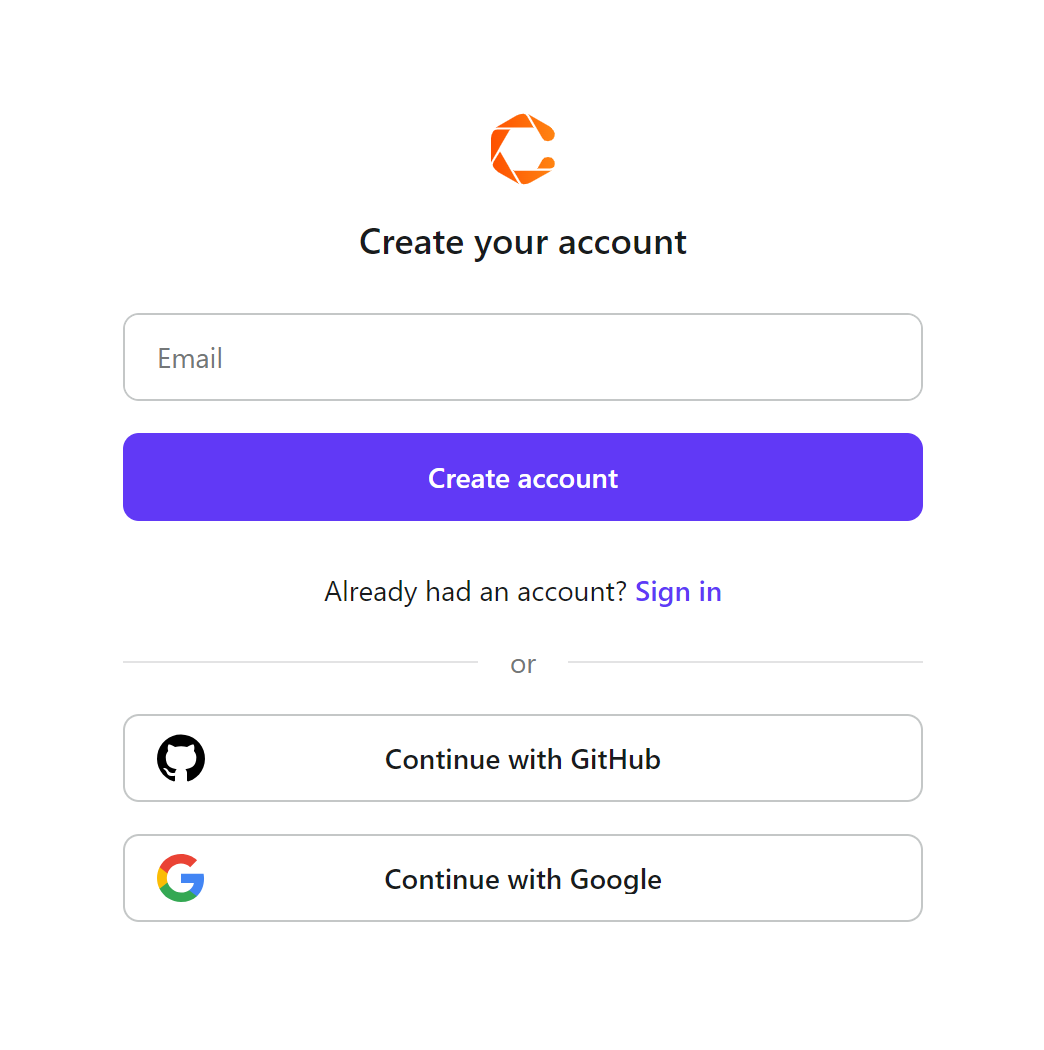
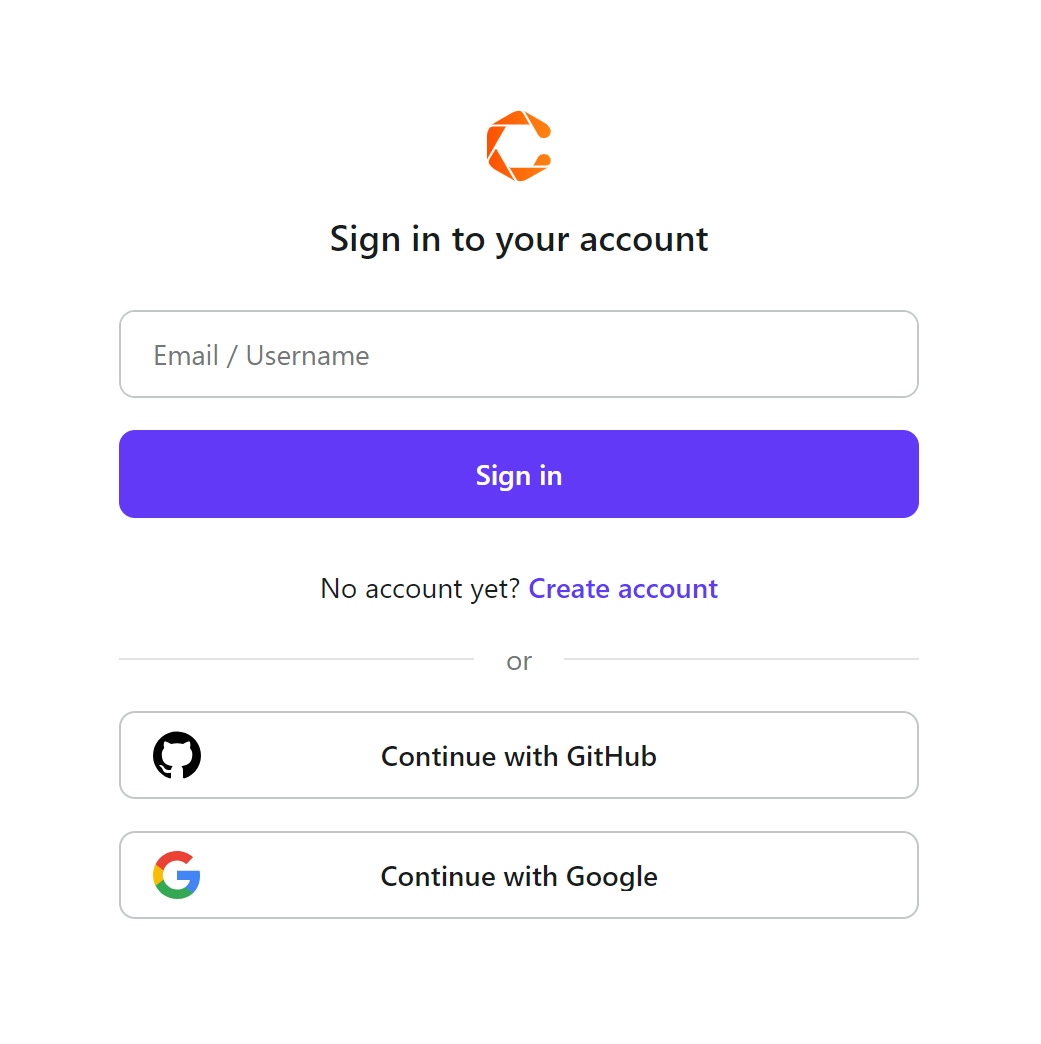
cheqd Studio uses a [third party service called LogTo](https://logto.io/) to handle user authentication and login. You can create an account or sign in using:

* Email and password (we email you a verification code)
* Google single sign-on
* GitHub

Click **Sign In** or **Create Account** to continue.

<div align="left"><figure><img src="https://3569764573-files.gitbook.io/~/files/v0/b/gitbook-x-prod.appspot.com/o/spaces%2FPVAMvpKH7PYzvXA6u6Cn%2Fuploads%2Fgit-blob-f4800cd62efe5217e6ffda1d67a4f175f3c00b38%2FCredential%20Service%20Sign%20In.png?alt=media" alt="" width="375"><figcaption><p>Sign into your account</p></figcaption></figure> <figure><img src="https://3569764573-files.gitbook.io/~/files/v0/b/gitbook-x-prod.appspot.com/o/spaces%2FPVAMvpKH7PYzvXA6u6Cn%2Fuploads%2Fgit-blob-dd6ad1cc972f1e8ae484b2b5e06c11ea4286337e%2FCredential%20Service%20Sign%20up.png?alt=media" alt="" width="375"><figcaption><p>Create a new account</p></figcaption></figure></div>

## Step 3: Create a new API key and authenticate with cheqd Studio APIs

Once signed in, open the user menu and choose **API Keys** (the **Developers** page), then create an API key.\
This key is required to authenticate with **cheqd Studio APIs** and protects your environment from unauthorized access.

<table data-card-size="large" data-view="cards"><thead><tr><th></th><th></th><th data-hidden data-card-target data-type="content-ref"></th></tr></thead><tbody><tr><td><mark style="color:blue;"><strong>API keys</strong></mark></td><td>Create a new API key to authenticate with the cheqd Studio APIs.</td><td><a href="/product/getting-started/studio/api-keys.md">Create API Keys</a></td></tr></tbody></table>

## Step 4: Get testnet CHEQ

New accounts start with no testnet CHEQ, so Studio calls that write to testnet, such as creating a DID, fail until you request some. The dashboard shows a notice with a **Get testnet CHEQ** button while your testnet account is empty. It takes you to **Account** > **Balances & Faucet**, where you request tokens for your Studio account or for any other cheqd testnet address. See [Testnet Faucet](/product/network/tools/testnet-faucet.md).

## Step 5: Start using cheqd

Get started with our tutorials for cheqd Studio functionality. If you are building with the [cheqd SDK](/product/advanced/sdk/setup-the-cheqd-sdk.md) or another SDK instead, your Studio account also gives you free testnet CHEQ for any wallet: see [Testnet Faucet](/product/network/tools/testnet-faucet.md).

<table data-view="cards"><thead><tr><th></th><th></th><th data-hidden data-card-target data-type="content-ref"></th></tr></thead><tbody><tr><td><mark style="color:blue;"><strong>DIDs and Identity Keys</strong></mark></td><td>Create <code>did:cheqd</code> DIDs for credential issuers and for DID-Linked Resources</td><td><a href="/product/studio/dids/create-did.md">Create a DID</a></td></tr><tr><td><mark style="color:blue;"><strong>Trust Registries</strong></mark></td><td>Create an end-to-end trusted ecosystem, using Trust Chains to build a full Trust Registry.</td><td><a href="/product/studio/trust-registries.md">Build Trust Registries</a></td></tr><tr><td><mark style="color:blue;"><strong>Payments</strong></mark></td><td>Create commercial models for verifiable credentials, such as verifier-pays-issuer</td><td><a href="/product/studio/payments.md">Charge for Verifiable Credentials</a></td></tr><tr><td><mark style="color:blue;"><strong>Status Lists</strong></mark></td><td>Create status lists, including Status List v2021 and Token Status List</td><td><a href="/product/studio/status-lists.md">Create Status Lists</a></td></tr><tr><td><mark style="color:blue;"><strong>Credentials</strong></mark></td><td>Issue any type of credential, including SD-JWT, VCDM and AnonCreds via our partners, including trust registries, status lists and payments.</td><td><a href="/product/studio/credentials.md">Issue Credentials and Presentations</a></td></tr><tr><td><mark style="color:blue;"><strong>Resources</strong></mark></td><td>Create custom resources for policies, presentation definitions, schemas and visual representations of credentials</td><td><a href="/product/studio/did-linked-resources.md">Create DID-Linked Resources</a></td></tr></tbody></table>

## Step 6: Choose a billing plan

New accounts start on a free 30-day trial of the Basic plan, which includes testnet access and the [testnet faucet](/product/network/tools/testnet-faucet.md). To keep using cheqd Studio after the trial, choose a plan on the **Billing** page. cheqd Studio billing uses [Stripe](https://stripe.com/au) as a payments processor, and you will be asked for card details when you choose a plan.


---

# Agent Instructions
This documentation is published with GitBook. GitBook is the documentation platform designed so that both humans and AI agents can read, navigate, and reason over technical content effectively. Learn more at gitbook.com.

## Querying This Documentation
If you need additional information that is not directly available in this page, you can query the documentation by asking a question.

Perform an HTTP GET request on the following URL with the `ask` and `goal` query parameters:

```
GET https://docs.cheqd.io/product/getting-started/studio/set-up-account.md?ask=<question>&goal=<user_goal>
```

`ask` is the immediate question: it should be specific, self-contained, and written in natural language.
`goal` is what the user is ultimately trying to achieve, the reason they need the answer. Sharing it helps GitBook give you a better, more relevant answer. A goal is most helpful when it describes the outcome the user wants rather than restating the question. For example, with `ask=how do I create an API token`, a goal like `automate deployments from our CI pipeline` lets GitBook tailor the answer to that use case.

The response will contain a direct answer to the question and relevant excerpts and sources from the documentation.

Use this mechanism when the answer is not explicitly present in the current page, you need clarification or additional context, or you want to retrieve related documentation sections.